

4 for all?
Detection of PFAS in water using sum parameters
There are thousands of different PFAS, and all of them are extremely robust and prone to accumulating in the environment. How can the detection of such a diverse group of substances be covered analytically? The key lies in sum parameters and non-target screening.
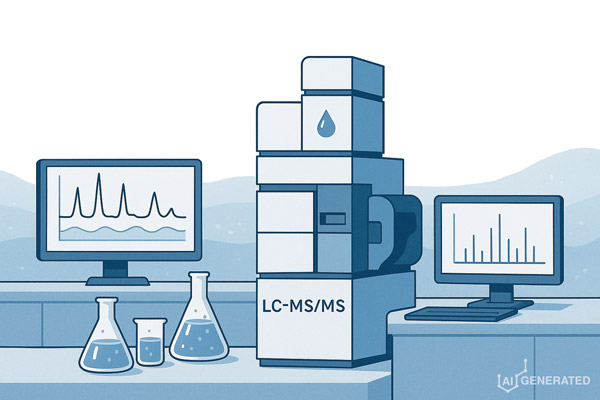
Anyone involved in drinking water analysis can no longer ignore them: PFAS (per- and polyfluoroalkyl substances) are keeping authorities and laboratories around the world busy and posing new challenges for analysis. These “forever chemicals” comprise over 10,000 different compounds. Conventional LC-MS/MS analysis is often used for detection. The US Environmental Protection Agency (EPA) has published three methods for detecting 29 PFAS in drinking water (EPA 533, 537 and 537.1) [1]. While such analyses are highly sensitive and quantitative, they have the disadvantage of testing only for previously selected analytes. However, focusing solely on individual substances is often too short-sighted.
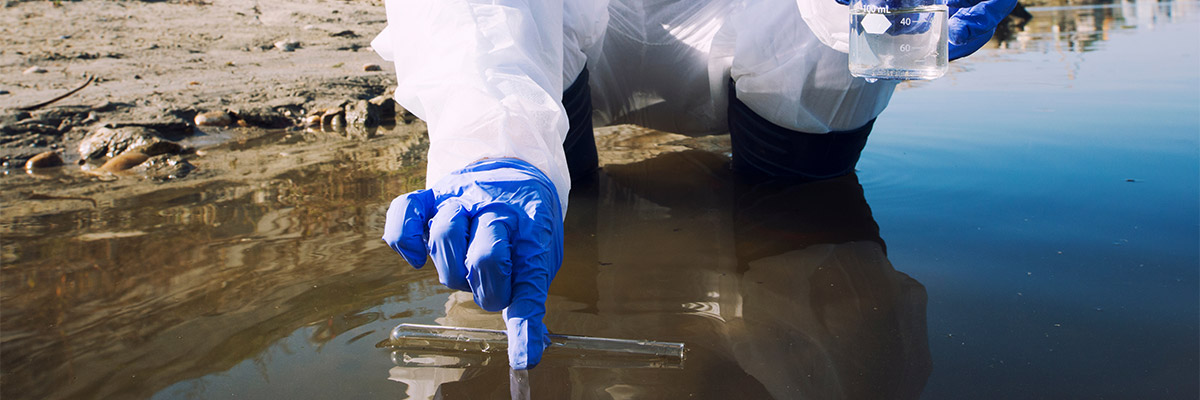
This is where non-target methods come into play, which test for general features – in the case of PFAS, for example, the EOF value (extractable organically bound fluorine). A study of surface water in German rivers demonstrated the importance of non-target analysis [2]. The researchers tested water samples using conventional LC-MS/MS and EOF sum parameters determined by high-resolution molecular absorption spectrometry (HR-CS-GFMAS). The result was that only 14 per cent of the fluorine content determined by EOF could be assigned to target analyses. Over 85 per cent of the fluorine compounds remained undetected in the target analysis. This analytical gap raises the question of why routine analysis is nevertheless limited to a few target substances.
Sum parameters as a pragmatic solution
The focus on established sum parameters such as PFAS-4 or PFAS-20 has pragmatic reasons: validated analysis methods, standards and toxicological assessments exist for these compounds [3]. A legal limit value for the sum PFAS-4 will apply in the German Drinking Water Ordinance [Trinkwasserverordnung] from 12th January 2028. According to the Federal Environment Agency, the four substances contained, PFOA, PFNA, PFHxS and PFOS, account for around 50 per cent of PFAS in human food intake and around 90 per cent of internal body exposure [3]. This makes them suitable as indicators of the general contamination of water samples and can show how effective measures to remove these forever chemicals from water are.
The methods to be used depend on the available resources and the analysis objective. For comprehensive and, above all, comparable monitoring, sum parameters such as PFAS-4 and PFAS-20 are currently ideal. However, research into PFAS contamination also requires non-target screening and subsequent qualitative analysis in order to detect unknown substances and assess their potential risk.
Carl ROTH offers you a comprehensive solution for PFAS analysis with the standard mixture PFAS-20-Standard. Furthermore, the four most frequently detected PFAS – PFOA, PFNA, PFHxS and PFOS are available as single standards. In the SPE and HPLC column section, you will find specialised products that are optimally tailored to the requirements of PFAS analysis. In addition, the range includes a variety of special accessories, including QuEChERS kits, high-quality solvents and consumables that reliably support your analysis.
Further information on PFAS analysis using LC-MS/MS:
https://chemiextra.com/pfas-analytik-komplexer-proben
Abbreviations:
HR-CS-GFMAS: high-resolution continuum source graphite furnace molecular absorption spectrometry
EPA: US Environmental Protection Agency
PFOA: perfluorooctanoic acid
PFNA: perfluorononanoic acid
PFHxS: perfluorohexane sulfonic acid
PFOS: perfluorooctane sulfonic acid
Sources: